Can You Run Component Speakers Without a Crossover?
Component speakers can be wired without the supplied passive crossover only when the factory system or an external DSP/active crossover is already filtering frequencies; in many DIY installs, it is best to keep the crossover. Skip it in the wrong setup, and you can get harsh highs, thin midrange, or a blown tweeter. This guide explains when bypassing is acceptable, when it is a bad idea, and how to decide fast.
Test wiring for component speakers without a passive network
You can physically connect component speakers without the passive crossover, but that does not mean the setup is correct. In a typical passive install, the crossover splits highs and lows so the tweeter is protected from bass and the woofer is not asked to play full range. Most final DIY installs should keep the supplied network in place.
Component speakers Use separate woofer and tweeter drivers that are intended to work as a matched set. The passive crossover keeps each driver in its intended range and helps prevent damage to the speakers. It also keeps the system playing the audio that they were built for.
Temporary test wiring versus final wiring
A quick test connection can help you verify polarity, confirm that a driver plays, or identify a dead channel. That is different from a final install. If the signal is not already filtered upstream, a bare tweeter or a full component set wired straight to a full-range source is a risk.
If you only need to confirm that a replacement tweeter works, a short test with bass protection can be acceptable. For a permanent setup, the answer should usually be no unless the vehicle already filters the signal or the system is active.
What the passive crossover does
The passive crossover splits the signal into high and low bands, sends the high frequencies to the tweeter, and cuts bass from that path. It also keeps the woofer from trying to play frequencies it should not handle. Without that filter, the drivers are forced to do jobs they were not built for.
Why tweeters need bass protection
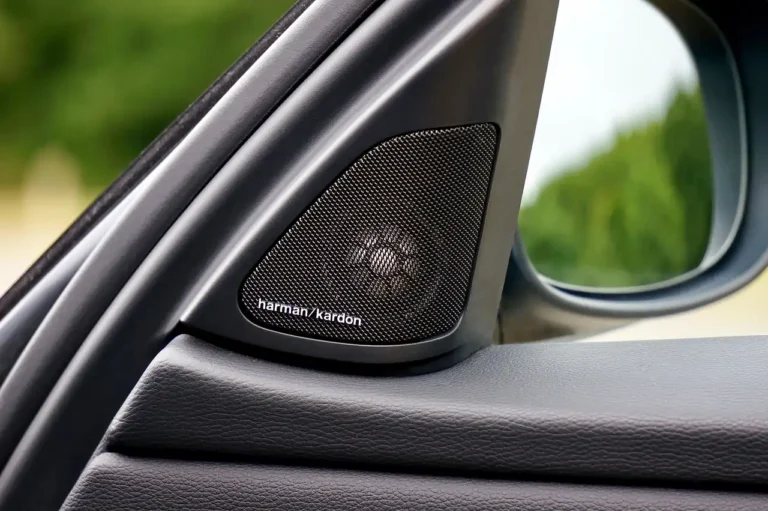
Tweeters are high-frequency drivers. They can be damaged by frequencies outside their range, especially bass-heavy content that creates too much excursion or heat. A capacitor or crossover network blocks low frequencies from the tweeter path.
Suppose you connect a tweeter straight to a factory radio with no filter and play a track with strong bass. The tweeter may still make sound, but it can be overloaded very quickly because it is receiving energy far below its intended range.
Why woofers need filtering too
The woofer or midbass driver handles low and mid frequencies. Without low-pass filtering, it can sound rough and confused because it is asked to reproduce content that belongs elsewhere. One forum reply described the mids as having “no low pass” without the crossover, and another noted the factory 6.5-inch speaker was getting “all the frequencies”.
That is the core problem. It may still play, but it will not be playing cleanly or correctly.
Can I skip the crossover?
Skipping the passive crossover is only reasonable in narrow cases. A bare tweeter can sometimes be protected by an inline capacitor, and an active DSP or amplifier can replace the passive network if it splits frequencies upstream. For most full component installs on a passive source, skipping the crossover is the wrong choice.
| Setup type | What is safe to do | What fails | Recommended action |
|---|---|---|---|
| Bare tweeter only | Use an inline capacitor for a brief test or a filtered tweeter feed. | Bass can overload the tweeter; it has no full crossover protection. | Use a proper high-pass network for final wiring. |
| Full component set on factory radio | Only if the factory system already has OEM filtering on each branch. | The tweeter may get bass, and the woofer may see all frequencies. | Use the supplied passive crossover unless the vehicle already filters the signal. |
| Component set with OEM factory tweeter capacitor | The tweeter may already have some bass protection. | The woofer still lacks a proper low-pass path, so the set is not fully managed. | Check whether the factory speaker wiring already includes a crossover or only a tweeter cap. |
| Active DSP/amp system | Frequency splitting can be done before the amp channels. | Misconfigured active routing can still send the wrong band to the wrong driver. | Bypass the passive crossover only when the DSP or amp is correctly set for active operation. |
What fails when you skip it
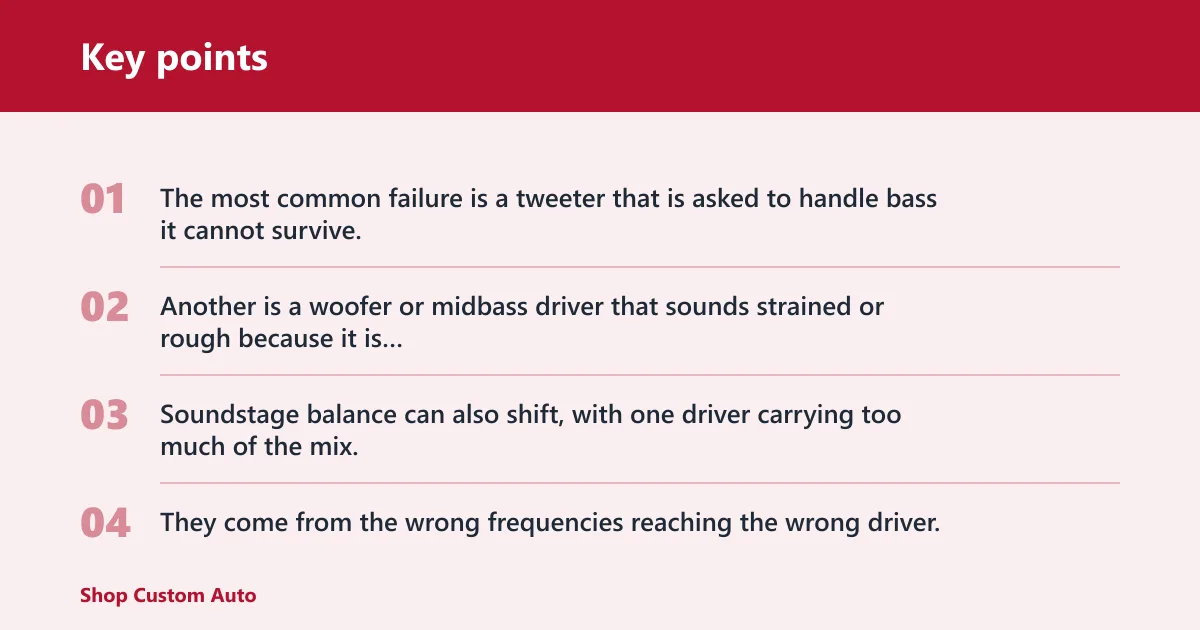
The most common failure is a tweeter that is asked to handle bass it cannot survive. Another is a woofer or midbass driver that sounds strained or rough because it is reproducing full-range content. Soundstage balance can also shift, with one driver carrying too much of the mix.
Those failures are not just about volume. They come from the wrong frequencies reaching the wrong driver.
Can I use a capacitor or bass blocker instead?
A capacitor or bass blocker can protect a tweeter, but it is not a full replacement for the supplied crossover. It blocks bass from the tweeter only. It does not create the full frequency split that a proper component crossover network provides for both drivers.
The thread that prompted this question specifically asked about using “capacitors inline with the tweeters” instead of crossovers. That can make sense when you are only feeding a tweeter and want simple high-pass protection. It does not solve the woofer side of the system.
When a bass blocker makes sense
A bass blocker is useful when the vehicle already has filtering for the woofer, or when you are doing a narrow test of the tweeter path. It can also be a practical check during troubleshooting if you only need to confirm that a tweeter plays without low-frequency stress.
It is not a clean final solution for a complete component speaker install unless the rest of the system is already handling the crossover work.
Factory wiring and head unit checks
Factory speaker wiring can simplify installation, but it does not guarantee that the signal is safe for direct connection. Some vehicles already have a capacitor on the back of the factory tweeter, and some speaker-wire pairs are full range from factory. You need to know which case you have before you connect anything.
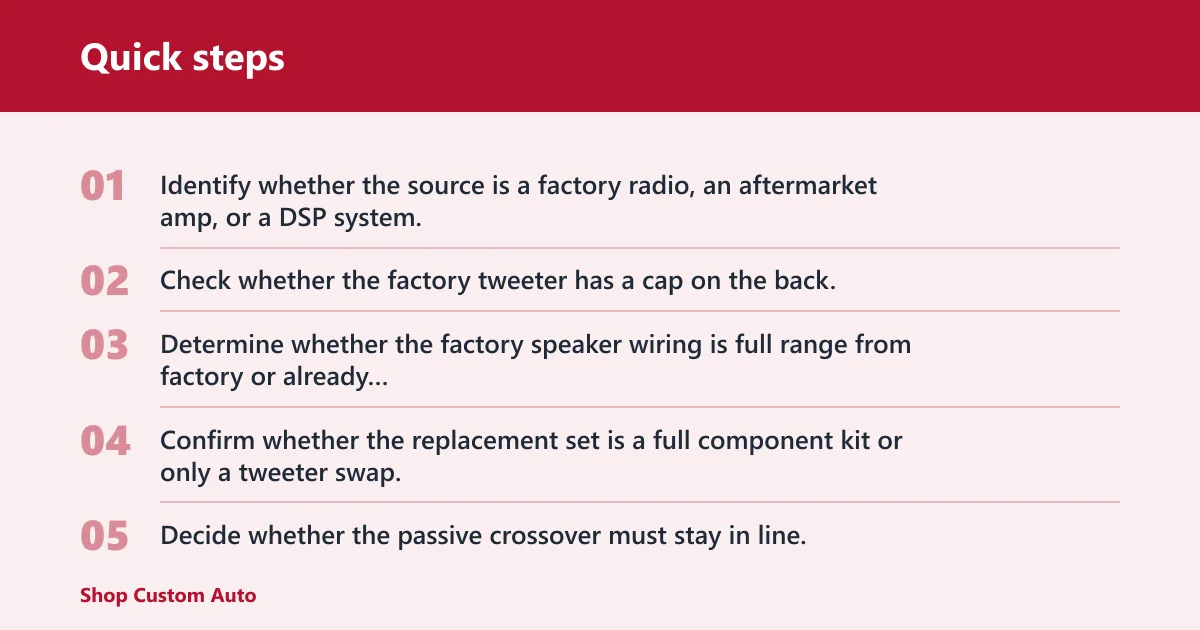
What to check before you connect anything
- Identify whether the source is a factory radio, an aftermarket amp, or a DSP system.
- Check whether the factory tweeter has a cap on the back.
- Determine whether the factory speaker wiring is full range from factory or already filtered.
- Confirm whether the replacement set is a full component kit or only a tweeter swap.
- Decide whether the passive crossover must stay in line.
Why OEM filters matter
A factory tweeter capacitor can make a direct tweeter swap look easier than it really is. The factory system may already be blocking bass on that branch, but the woofer path can still be wide open. That is why the full component set still usually needs its own crossover unless the vehicle already includes proper filtering on both sides.
One forum answer noted that you “don’t really have to pull the head unit Out”. That can be true when you are tapping existing speaker wiring, but it does not remove the need to verify what the factory system is sending down that wire.
Installing component speakers the right way
For a normal passive install, mount the crossover Near the door, kick panel, or another dry space close to the speaker wiring. The forum answer noted that passives can be stored between the “inner door skin and door panel”. From there, route the input from the radio or amp into the crossover, then send separate output leads to the woofer and tweeter.
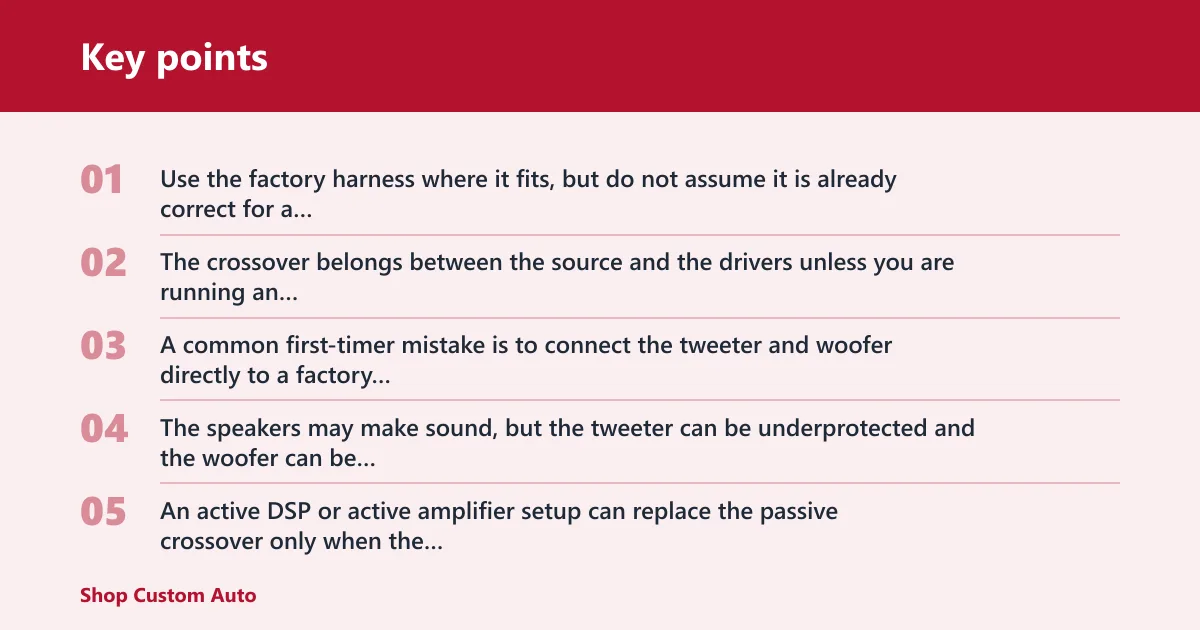
Basic install path
Use the factory harness where it fits, but do not assume it is already correct for a full component set. The crossover belongs between the source and the drivers unless you are running an active system with frequency splitting upstream.
A common first-timer mistake is to connect the tweeter and woofer directly to a factory radio because both pairs of wires seem live. The speakers may make sound, but the tweeter can be underprotected and the woofer can be forced to play frequencies it should not handle.
How active systems change the rule
An active DSP or active amplifier setup can replace the passive crossover only when the frequency split happens before the amp channels. In that case, each driver gets its own filtered feed. That is a different system from simply deleting the passive network and tying both drivers to a full-range output.
If the active routing is wrong, the symptoms look similar to a skipped crossover: rough highs, weak midbass, and a poor blend between drivers.
Frequently asked questions
Can you use component speakers without crossover?
Only in limited cases. You can wire them without the supplied passive crossover if the vehicle already filters the signal or if an active DSP or amp is doing the frequency split upstream. For most DIY final installs, the crossover should stay in place.
Do you have to use crossover with component speakers?
In a normal passive setup, yes. Component speakers are designed to work as a matched set with a crossover that protects the tweeter and limits the woofer to the right band. If the system is active, the split may happen elsewhere instead.
What happens if you run component speakers without a crossover?
The tweeter can get bass it cannot handle, and the woofer can receive full-range audio it was not meant to reproduce. The result is often rough sound, weak midbass control, or damage to the tweeter if low frequencies are left unchecked.
Can I use bass blockers on tweeters instead of the full crossover?
Yes, but only for the tweeter path, and only as a partial fix. A bass blocker can stop low frequencies from reaching the tweeter, but it does not replace the full crossover network that also manages the woofer side of the system.
Will my mids play full range if I skip the crossover?
Yes, and that is part of the problem. A commenter noted the mids would have “no low pass” without the crossover. Full-range feed can make the woofer sound rough, confused, or out of balance with the tweeter.
How do I install component speakers with crossover?
Run the source output into the crossover input, then connect the crossover outputs to the woofer and tweeter leads. Mount the crossover close to the speaker wiring in a dry location. If the vehicle already has OEM filtering, check that before deciding whether the supplied crossover stays in line.