Are Component Speakers Worth It Without an Amp for Daily Use?
Yes, component speakers can be worth it without an amp if they’re efficient; look for around 88 dB sensitivity or higher and 4-ohm models, but they won’t play very loud or as clean if you expect amp-level output. Done poorly, you pay for better parts and still get thin midbass, harsh highs, and crossover parts that do little for the sound. This guide shows when a no-amp component setup makes sense, when it doesn’t, and which specs matter most on factory or head-unit power.
Are component speakers worth it without an amp?
Yes, in the right setup. Component speakers are a good no-amp buy when you want clearer front-seat sound, less rough treble, and better stereo placement from a factory radio or modest aftermarket head unit. They are a poor buy when you want strong output, heavy bass, or loud highway playback from low power.
When the upgrade is a good buy
Choose them if your current speakers distort early, the tweeters sound dull or sharp, or the front stage feels stuck low in the doors. A matched component set can improve clarity and stereo separation on radio power, especially if it has roughly 88 dB sensitivity or better and a 4-ohm load.
They also make sense if you plan to add an amp later. In that case, buying the right front speakers now can save time later, because the crossover network and driver layout are already in place.
When you should wait for an amplifier
Wait if your main goal is volume, midbass punch, or strong sound at freeway speed. A factory source may not have the voltage swing or current delivery to control a lower-sensitivity component set, and the result can be weak output, sharp treble, and a system that feels underfed.
If your budget is tight, a good coaxial upgrade may be the smarter spend. Coaxials are simpler to install and often give better value when you will never add amplification.
What component speakers actually need to work well
Component speakers use separate woofers and tweeters, usually with a passive crossover included in the set. They can work without an amp, but they need enough clean signal, sensible impedance, and decent sensitivity to sound balanced instead of strained.
Separate woofer and tweeter
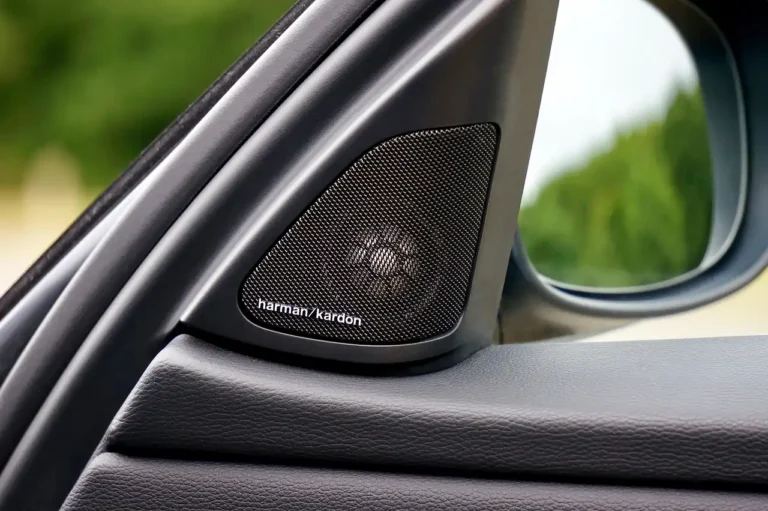
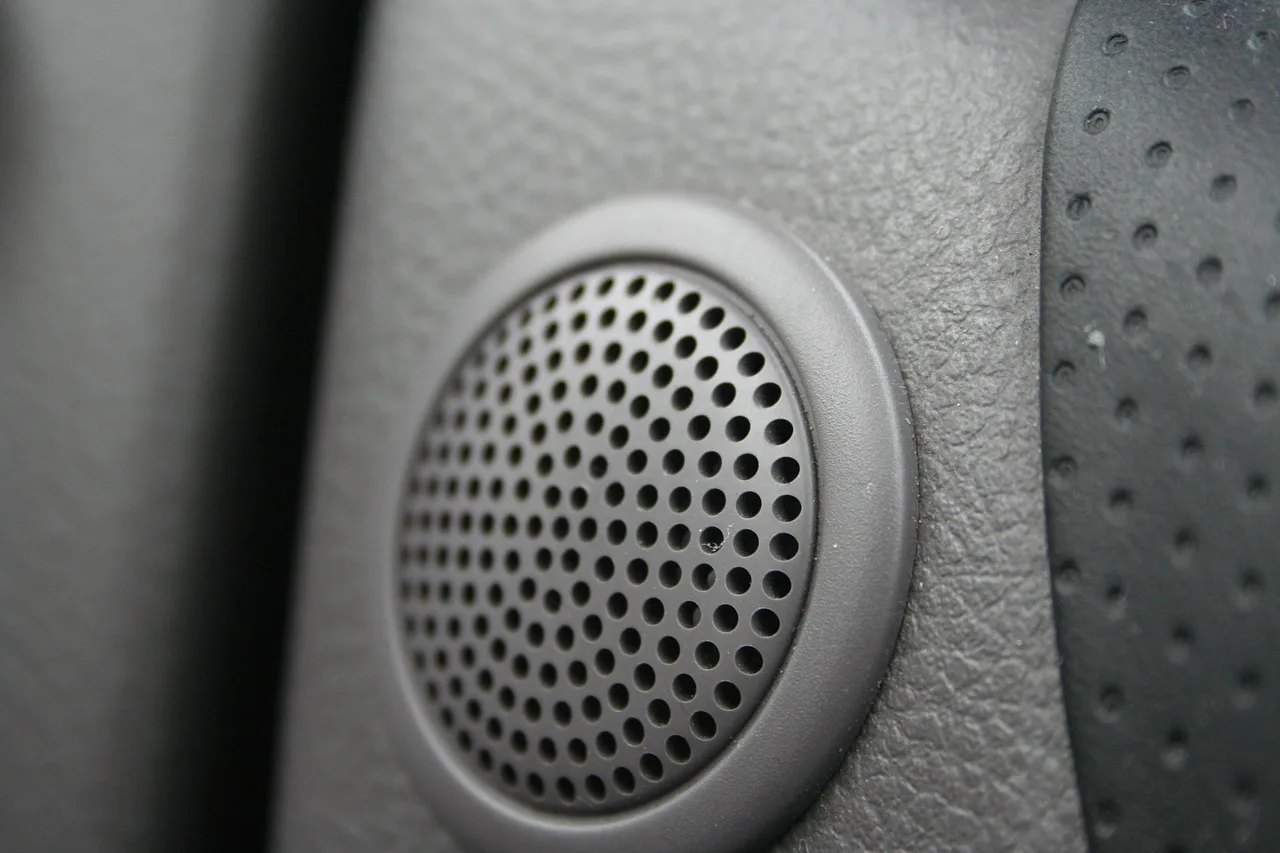
The woofer handles midrange and midbass content. The tweeter handles the upper range, where cymbals, vocal air, and guitar bite live. Keeping them separate lets the tweeter sit higher in the cabin for better imaging, while the woofer mounts lower in the door.
That layout is part of the appeal. It can place vocals higher and widen the front stage, which many coaxials cannot do as well.
Passive crossover basics
The passive crossover splits the signal between drivers, sending low frequencies to the woofer and protecting the tweeter from frequencies it cannot handle. Most component sets include one, and it usually installs between the radio or amplifier and the speakers.
Placement matters. Crossovers are often mounted inside the door, behind the kick panel, or under the dash, as long as they stay dry and accessible enough for service.
Two-way versus three-way sets
Two-way component sets are the common choice. They use one woofer and one tweeter per side, so they are easier to fit and easier to run from modest power.
Three-way sets add a dedicated midrange driver. They can sound excellent, but they are usually a worse no-amp pick because they ask more from placement, tuning, and available power.
Can a factory head unit power component speakers?
Yes, a factory head unit can power component speakers, but output is limited. Most OEM radios use a small internal amp, fixed EQ curves, and loudness tuning that can skew the frequency balance. The speakers may work fine at moderate levels, yet still fall short of full output and control.
Factory amp limits and OEM tuning
Factory head units often deliver modest real power, not the marketing number on the radio faceplate. OEM tuning can add bass and treble shaping at lower volume, then flatten or compress the sound as volume rises.
That matters because a component speaker that seems bright on a factory radio may actually be revealing the radio’s tuning, not just the speaker’s voicing.
Clean power versus clipped power
Clean power is a low-distortion signal that stays within the radio’s limits. Clipped power is what happens when the source is pushed past those limits and the waveform gets squared off, which can make tweeters sound hard and reduce usable volume.
That is why a higher sensitivity speaker can be a better no-amp match than a bigger, lower-efficiency model.
What changes at highway speed
Vehicle noise floor matters. Road and tire noise can mask detail, especially in the 500 Hz to 4 kHz range where vocal clarity lives. At highway speed, a no-amp component set that sounds fine in the driveway may feel thin or distant.
City driving hides less of that weakness, so the same setup can seem more satisfying at lower road speeds.
Which specs matter most if you skip the amp?
When you are running off a factory source or low-power head unit, sensitivity and impedance matter more than big power numbers. RMS power handling is still useful, but it is a ceiling for safe use, not a sign that the speaker will sound loud on radio power alone.
Sensitivity and real-world loudness
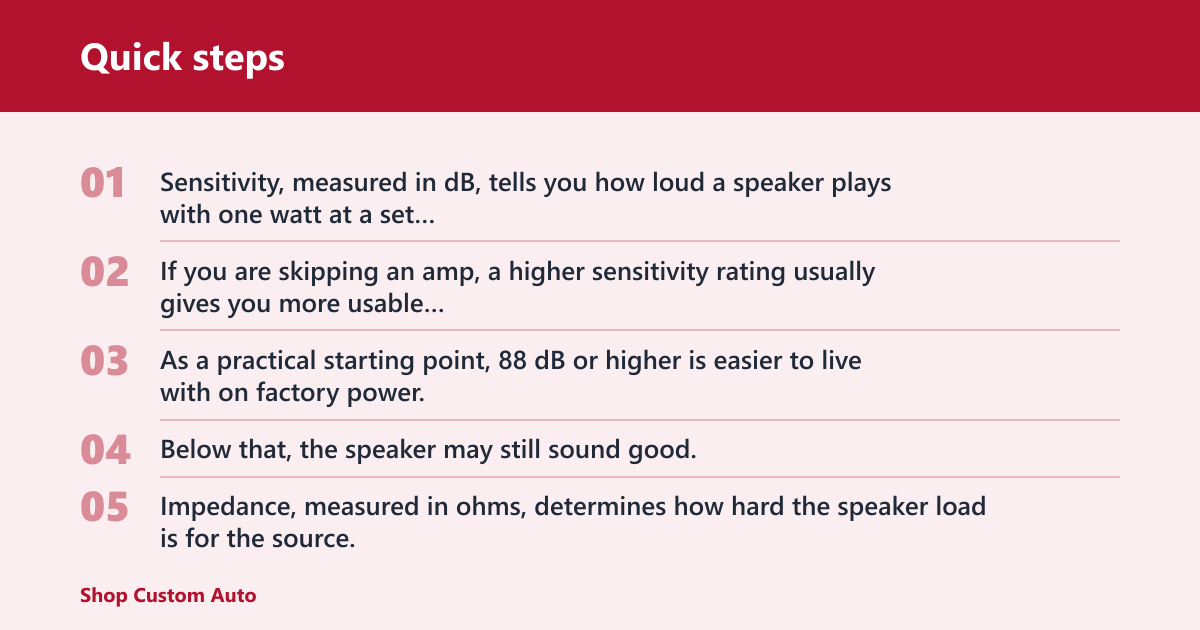
Sensitivity, measured in dB, tells you how loud a speaker plays with one watt at a set distance, usually 1 meter. If you are skipping an amp, a higher sensitivity rating usually gives you more usable volume than a heavier power-handling spec.
As a practical starting point, 88 dB or higher is easier to live with on factory power. Below that, the speaker may still sound good, but it will usually need more voltage to wake up.
Impedance and load on the radio
Impedance, measured in ohms, determines how hard the speaker load is for the source. Four-ohm speakers are common and are often a safe match for factory radios and many aftermarket head units. Some 2-ohm designs draw more current and can play louder, but they also place more demand on the source.
If the radio is not stable into low loads, a 2-ohm speaker can create heat, distortion, or protection issues. Match the speaker load to the source, not the other way around.
RMS power handling as a ceiling, not a target
RMS power handling is the continuous thermal rating a speaker can tolerate. It does not mean the speaker needs that much power to sound good, and it does not mean a factory radio will deliver anything close to that level.
A 60-watt RMS component set can still be a strong no-amp choice if it is efficient. A 150-watt RMS set may still sound weak if sensitivity is low and the source is clipped or underpowered.
No-amp decision checklist by buyer profile
This is the most useful way to judge value: by source power first, then by speaker specs. The right answer changes if you have a factory radio, a modest aftermarket head unit, or a plan to add an amplifier later.
| Buyer profile | Expected outcome | Must-have specs | Red flags |
|---|---|---|---|
| Factory radio only | Clearer stage and cleaner high end than stock, but modest volume and limited bass control | 4-ohm load, 88 dB sensitivity or higher, included passive crossover, easy-to-fit tweeter placement | Low sensitivity, 2-ohm load, three-way set, sharp tweeter voicing, strong bass expectations |
| Low-power aftermarket head unit | Noticeable step up in clarity and staging if the head unit has a cleaner internal amp | 4-ohm or stable 2-ohm only if the radio supports it, 88 to 91 dB sensitivity, sensible RMS range, proper high-pass setting if available | Head unit rated only for paper watts, bass boost turned up, clipped output at higher volume, oversized three-way set |
| Amp-ready future build | Solid temporary sound now, with more headroom after amplification later | Good crossover quality, durable tweeter, 4-ohm load, moderate RMS rating that fits later amp plans | Speaker chosen only for power handling, no plan for crossover location, mismatch with future amp channel count |
Simple decision rule
If you have factory power and want a clear upgrade now, buy efficient 4-ohm components with a sensitivity rating around 88 dB or higher. If your goal is loud, clean output at speed, save for the amp first. If you know amplification is coming, buy the set that will still make sense after that upgrade.
Will component speakers sound better than coaxials without an amp?
Sometimes yes, but not always. Component speakers usually win on imaging and sound staging because the tweeter can be placed higher and aimed more deliberately. Coaxials can still be the better value if your budget is fixed, your source power is weak, or you want a simpler install.
Where components win on imaging
When the tweeter is mounted near ear level and the crossover is matched well, vocals often sound more forward and centered. That matters more in daily driving than many shoppers expect, because the front stage is what you hear most.
Where coaxials may be the better value
Coaxials avoid separate crossover mounting and extra wiring. If you are not chasing stage height or later amp expansion, a quality coaxial can deliver more useful output per dollar from a factory radio.
Say your sedan has a bass-light OEM system and you mostly drive city streets. A 4-ohm, 89 dB component set can be a smart step up. Suppose the same car spends an hour a day on the interstate; without amplification, the gains may be harder to hear over road noise.
What happens if you add an amplifier later?
An aftermarket amplifier can make component speakers sound much better when it is matched correctly. You gain real RMS power delivery, more headroom before distortion, and better control over the woofer and tweeter. That usually brings stronger midbass, cleaner peaks, and less strain at volume.
RMS power delivery and headroom
Good amp matching is about usable power, not just a big number. If the amp can deliver the speaker’s recommended continuous power into the correct impedance, the system usually plays cleaner and louder before it breaks up.
Gain setting and high-pass filter setup
Gain is not a volume knob. Set it so the amp reaches full output without clipping the signal early. A high-pass filter helps keep deep bass out of the component speakers, which reduces distortion and protects the woofers from trying to act like subwoofers.
DSP compatibility and tuning
If the system uses a DSP or a factory radio with digital signal processing, the speaker choice should fit that setup. A DSP can correct response and delay, but it cannot fix a bad impedance match or a speaker that is simply too insensitive for the source.
What should I buy if I do not plan to add an amplifier?
Buy for sensitivity, impedance, and installation fit first. A 4-ohm component set with roughly 88 dB sensitivity or better is often a safe no-amp starting point. Keep the crossover simple, avoid oversized three-way sets, and do not pay extra for power handling you will never use.
- Check whether your source is a factory radio or a low-power aftermarket head unit.
- Choose 4-ohm speakers unless your source is confirmed stable with a different load.
- Prioritize sensitivity over high RMS ratings.
- Confirm the set includes a passive crossover.
- Skip low-sensitivity three-way kits unless an amp is part of the plan.
- Think about vehicle noise floor: highway commuters need more output than city-only drivers.
Frequently asked questions
Are component speakers worth it without an amp?
Yes, if you pick the right set for your source. Efficient 4-ohm component speakers can improve imaging and treble detail on a factory radio or low-power head unit. They are less compelling if you need strong volume, heavy midbass, or clean sound at freeway speed.
Can you run component speakers off a factory head unit?
Yes. Many component sets will play from a factory head unit, but output is limited by the radio’s internal amp, OEM EQ, and loudness tuning. The best no-amp results usually come from higher sensitivity speakers that do not need much power to sound alive.
Will component speakers sound better than coaxials without an amp?
Often yes, especially for imaging and stage placement. The separate tweeter lets you mount highs higher in the cabin, which can make vocals sound more centered. A good coaxial can still be better value if your source power is weak or your budget is tight.
What happens if you power component speakers directly from the radio?
They can work, but they usually play at a fraction of their potential. If the radio clips early or lacks current, tweeters can sound harsh and midbass can feel thin. Clean, efficient speakers reduce the penalty, but they do not remove it.
Do I need a crossover if I am not using an amp?
Yes, in almost all component speaker setups. The passive crossover splits frequencies between the woofer and tweeter and protects the tweeter from low frequencies. Most component sets include one, so you usually do not need to buy it separately.
How much power do component speakers need to sound good?
There is no single number, because sensitivity and impedance matter just as much as wattage. Many component sets can sound good on head-unit power if they are efficient. For louder, cleaner output, an amplifier with proper RMS power and correct gain setup helps a lot.