How Do Component Speakers Work in a Car?
Component speakers split audio into separate high, mid, and low paths with an external crossover, so each driver gets only the frequencies it is designed to handle. Wired wrong, they can sound thin, harsh, imbalanced, or fail early. This guide explains the signal path, what changes with factory power versus an amplifier, and how to trace common sound problems.
Component speaker basics
Component speakers use separate tweeter and woofer drivers instead of one full-range unit doing everything. In car audio systems, that split lets each driver work inside a narrower band, which usually improves clarity and sound staging compared with basic full-range or coaxial speakers.
Which drivers handle which frequencies?
The tweeter handles high frequencies. The woofer handles midbass and lower frequencies. That division matters because a small dome tweeter can move fast enough for treble detail, while a larger woofer can move more air for kick drum, bass guitar, and the body of vocals.
A component set only works as intended when each driver gets the band it is built for. Send bass to a tweeter and it can distort or fail. Send too much high-frequency energy to a woofer and the result can be dull or strained sound.
Why the crossover matters
The crossover splits the signal so the tweeter gets high frequencies and the woofer gets the rest. Many component speaker systems use a passive crossover box, while active systems split the signal before amplification. Either way, the crossover is the part that keeps each driver in its lane.
Car speaker installation can require a crossover for component speaker systems. Without it, the tweeter may get low-frequency content it cannot handle, or the woofer may play too much upper range and sound harsh. Wrong wiring can also leave a tweeter silent.
How the signal path works
A car audio system starts at the source unit, then moves through the crossover, then reaches the tweeter and woofer. That path is simple on paper, but each link changes what you hear. When one link is wrong, the symptom usually shows up in a predictable way.
Source unit to crossover
The factory radio or aftermarket head unit sends the audio signal first. A factory radio often has lower power output than an amplifier, but it may run some entry-level component sets. Output level, gain setting, and speaker impedance all matter here.
Speaker impedance in car audio is often around 4 ohms. If the load does not match what the radio or amp expects, output can drop, distortion can rise, and heat can build. That is why impedance matching is not an extra detail; it is part of the basic wiring plan.
Crossover to tweeter and woofer
Once the signal reaches the crossover, it is divided between the drivers. A passive crossover does this after the amplifier or radio output. An active crossover does it before amplification, which gives more tuning control but also adds more setup steps.
A wrong connection at the crossover can create harsh highs, dead tweeters, or weak output. If the tweeter leads are reversed or the low-pass and high-pass sides are mixed up, the system may still play, but the sound usually loses balance fast.
What changes with passive versus active crossovers?
A passive crossover is simpler to install because it sits between the amp or radio and the speaker drivers. An active crossover needs channel assignment and amplifier planning, but it can give tighter control over crossover points and level matching.
For most owners comparing component speakers for a car, passive setups are easier to understand and wire. Active setups fit better when the system already has separate amp channels and the installer wants finer control over each driver.
Signal path and failure-point map
| Link in the path | What it should do | What goes wrong | Typical sound result |
|---|---|---|---|
| Source unit | Send a clean stereo signal at usable volume | Underpowered radio, clipped output, wrong settings | Dull sound, harsh peaks, low volume, distortion at higher volume |
| Crossover | Split highs to tweeter and lower frequencies to woofer | Missing crossover, reversed wiring, wrong channel routing | Dead tweeter, harsh highs, thin midrange, weak output |
| Tweeter | Play high frequencies with clear imaging | Poor placement, wrong polarity, no protection from low bass | Harsh or vague treble, shifted image, failure risk |
| Woofer | Play midbass and lower frequencies in a sealed mount | Bad mounting seal, wrong size, depth conflict, reversed polarity | Muffled bass, weak kick, panel buzz, phase cancellation |
| Power and impedance | Match load to radio or amplifier output | Too low or mismatched impedance, weak current delivery | Heat, protection mode, low output, compression at volume |
A common first-timer mistake is installing a component set with the woofer wired correctly but the tweeter bypassing the crossover. The system may seem alive at first, then the top end turns sharp and unreliable. In some cases the tweeter fails, while the woofer sounds oddly recessed.
What happens when each link is wrong?
Wrong polarity on one driver can cancel part of the sound, especially around the crossover region. That often shows up as weak center imaging, hollow vocals, or bass that seems to vanish at the listening position. It is one of the fastest causes to check.
No crossover is a bigger problem than a cosmetic wiring mistake. The drivers may still produce sound, but the tweeter is exposed to energy it should not get. That is how a system turns bright for a few songs, then becomes damaged or uneven.
Bad mounting seals around the woofer let front and rear sound waves leak into each other. That weakens bass output and can make the door sound like a loose box. Loose screws can also cause rattling or speaker damage.
Where do tweeters go in a car?
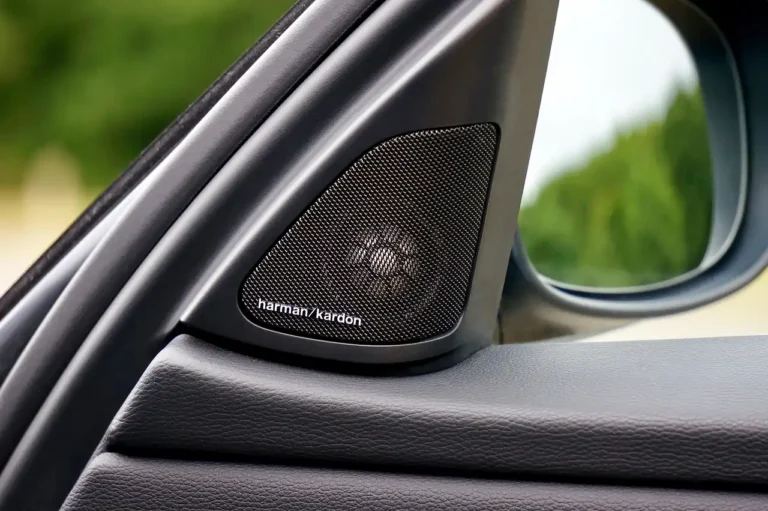
Tweeters go where high frequencies can reach your ears without being blocked. Dash, sail panel, A-pillar, and upper door locations are common because they can raise the apparent sound stage and improve clarity when the angle points toward the seating position.
Common mounting spots
Dash speakers are a budget-friendly way to improve audio when the car allows them. Sail panels and A-pillars often place the tweeter higher and farther forward. Upper door mounting is also used when the car does not have a clean dash or pillar location.
How placement affects imaging
Placement changes arrival time and angle. A tweeter aimed toward your ears usually sounds more direct and can help separate vocals from road noise. A tweeter aimed at glass or placed too low can smear the top end and make the image feel pulled down to one side.
Say your tweeters sit in the lower door near your knees while the woofer is in the door mid-panel. The music may still be clear, but the image can feel low and distant because the highest frequencies never reach ear level with a good angle.
What bad placement sounds like
Too-low placement often sounds dull or off-center. Too-direct placement can sound bright or sharp. If the tweeter is hidden behind a trim panel or blocked by a grille angle, the result may be a soft top end even when the wiring is correct.
Where do woofers fit best?
Woofers usually fit in doors or kick panels because those spots can support larger mounting space and stronger low-frequency output. The woofer must match the speaker size and mounting depth the vehicle allows, or the basket, magnet, or window path may interfere.
Door and kick panel locations
Door speakers have the most significant impact on sound profile in many cars because they handle much of the midbass and lower range. Kick panels can help with imaging and can reduce some off-axis problems, but they are more vehicle-specific and harder to package cleanly.
Why mounting depth matters
Mounting depth matters because a woofer that is too deep can hit glass, brackets, or inner metal during window travel. A shallow fit that is still secure is usually better than forcing a deeper basket into a door with no clearance.
Why the seal around the baffle matters
The woofer needs a solid seal between the speaker frame, adapter, and door metal or baffle. Air leaks reduce low-frequency pressure, so the bass can sound weak even when the driver is new. That same leak can make the door panel buzz at moderate volume.
Do component speakers need an amp?
Component speakers do not always need a car amplifier, but an amp gives more power headroom and usually keeps distortion lower at higher volume. A factory radio can run some entry-level sets, though output, gain, and impedance matching become more important as demand rises.
What a factory radio can do
A factory radio can be enough for efficient speakers at moderate volume. It is less likely to keep control when the system needs more current, especially with 4 ohm speakers that want clean power as the volume goes up.
Rear speakers may require a separate amplifier in some builds, especially when the system uses mixed speaker types or when the rear fill needs more output than the radio can supply cleanly.
What an amplifier changes
An amplifier adds headroom. That means less clipping at the same listening level and more control when the music peaks. It also helps the crossover and drivers behave more predictably because the signal stays cleaner under load.
How impedance affects load and heat
Many car audio component sets are 4 ohms, but the rest of the system still has to be compatible with that load. If impedance drops below what the radio or amp wants, heat rises and output can become unstable. If the load is too high, the system may play quietly and sound compressed.
Component vs coaxial speakers
Component speakers often sound clearer than coaxial speakers because the tweeter and woofer are separated and can be placed for better staging. Coaxial speakers combine the tweeter and woofer in one unit, which simplifies installation but gives less control over placement and angle.
Sound staging and clarity
With component speakers, you can aim the tweeter toward the listener and keep the woofer where the car has the best mounting space. That flexibility often improves image height and detail. Coaxial speakers keep both drivers together, so the sound comes from one lower point.
Installation complexity
Component sets take more planning. You must place the tweeter, mount the woofer, route the wiring, and connect the crossover correctly. That is more work than dropping in a coaxial speaker, which is why coaxials remain a practical choice for quick replacement jobs.
When a coaxial is the better fit
If the goal is simple factory replacement, a coaxial speaker may be the better fit. If the vehicle has little room for a crossover, if the owner wants fewer parts, or if the install must stay quick, coaxial speakers reduce the number of failure points.
Frequently asked questions
How does a car speaker work?
A car speaker turns an electrical audio signal into air movement. The coil, magnet, and cone work together so the cone moves in step with the signal. In component systems, the crossover sends only the frequencies each driver can handle, which keeps the output cleaner and more controlled.
What are component speakers for car?
Component speakers for a car are separate tweeter and woofer drivers used with a crossover. They are built for clearer sound staging and better frequency separation than basic full-range speakers. The tradeoff is more installation work and more chances to wire the system wrong.
How do component speakers work in a car?
They work by splitting the audio signal before it reaches the drivers. The crossover sends high frequencies to the tweeter and lower frequencies to the woofer. Placement, polarity, impedance, and power all affect how balanced the system sounds and whether any driver is stressed.
Why do my component speakers sound muffled?
Muffled sound usually points to a wiring, placement, or sealing problem. Check for reversed polarity, a missing or miswired crossover, poor tweeter placement, or a bad woofer seal in the door. If the radio is weak, the system may also sound closed-in before it gets loud.