Does Speaker Depth Matter More Than Speaker Size?
Speaker depth often matters more than nominal size because a 6.5-inch driver that sits too deep can hit the window track, magnet, or door panel even if the diameter is correct. Ignore that, and you can end up with a speaker that will not install, rattles, or blocks the window. This guide explains how depth compares with diameter, how to measure the mounting space, and what fitment checks to make before you buy.
How does speaker size compare with speaker depth?
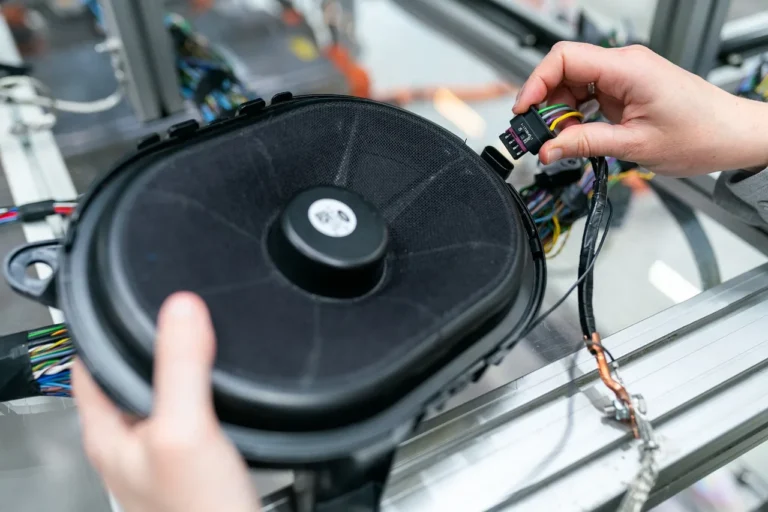
Speaker diameter tells you the nominal size, but it does not tell you whether the speaker will clear the door hardware behind it. In car doors, mounting depth is the rear-clearance limit behind the basket and magnet. A speaker can match the opening on paper and still fail in the door cavity.
The cutout diameter sets the maximum frame size at the opening. The depth limit comes from what sits behind that opening: window glass, regulator arms, inner door bracing, a factory basket, or a wiring assembly. Those are separate checks, and they can disagree.
Where do diameter, cutout, and clearance diverge?
Nominal size, mounting hole cutout, and mounting depth are separate measurements. A 5.25, 6.5, or 6×9 speaker may match the nominal category your vehicle uses, but the basket shape, magnet depth, and terminal location can still make it too deep for the door. The opening can be right and the clearance can still be wrong.
That is why speaker size alone does not guarantee fit. A larger driver can create fit issues, and a smaller one can leave unused space or need an adapter ring. The door fit check still needs the cutout, the recess, and the rear clearance.
When does speaker depth matter most in a car door?
Depth matters most in car doors with moving glass, a window regulator, or a shallow factory cavity. It also matters when the opening is recessed or when the replacement speaker has a tall basket or large magnet. In those cases, the rear of the speaker can touch hardware long before the front ring is fully seated.
Why do moving glass and regulators make depth critical?
The window regulator is a common depth-interference point. Because the glass moves through the same space the speaker wants to occupy, clearance should be checked at full glass travel, not just with the window halfway down. A speaker that clears at one position may still hit the glass later.
Suppose a 6.5-inch replacement fits the bolt pattern but the magnet sits farther back than the factory unit. The speaker may install cleanly, then strike the glass when the window lowers. That is a depth problem, not a diameter problem.
How do recessed openings and shallow cavities affect fit?
Some factory openings are recessed, which changes where the speaker sits relative to the panel surface. That recess affects the outer diameter measurement and the front seating depth. A recessed lip can also reduce usable space for adapter brackets or trim rings.
Factory speaker housings can be part of the problem too. A harness, metal basket, or enclosure may reduce usable depth and may need removal before you measure. If the old assembly stays in place, the depth reading can be misleading.
Why do large magnets, tall baskets, and adapter stacks change the result?
Basket height and magnet depth vary by brand and model. Two speakers with the same nominal size can have very different rear profiles. Add a spacer or adapter ring, and the mounting position moves outward, but the speaker still needs the same internal door clearance behind it.
A spacer can help with a shallow factory opening. It cannot create extra room inside the door shell. If the window glass or regulator is already close, moving the speaker outward may help the frame clear the panel, but it will not fix a magnet that still swings into the moving mechanism.
How do you measure the door opening correctly?
Measure the opening before you buy a replacement. wikihow.com notes that there are no standard measurements for speakers, recommends measuring the speaker before buying a replacement, says to remove the speaker from the cabinet or wiring before measuring, says to check whether the hole is recessed, and says to measure the outer hole cutout from one edge to the opposite side. Those steps matter in car doors too.
What should you measure at the mounting hole and recess?
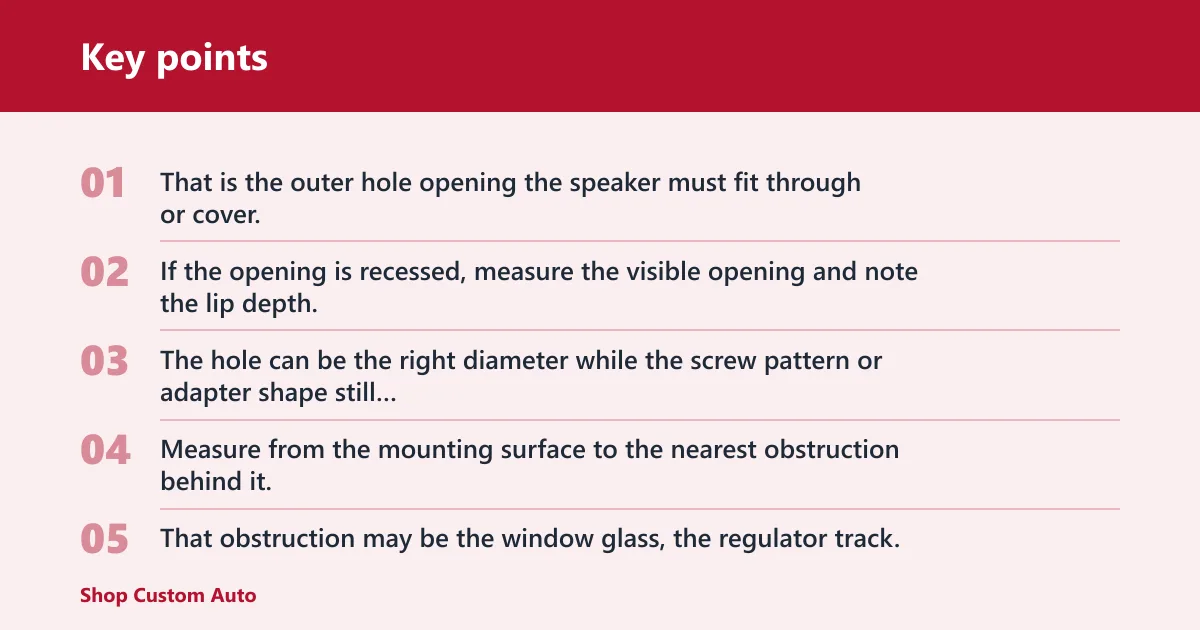
Start with the cutout diameter. That is the outer hole opening the speaker must fit through or cover. If the opening is recessed, measure the visible opening and note the lip depth, because the recess can change how the frame seats and how much room the trim ring has.
Then inspect the mounting pattern. The hole can be the right diameter while the screw pattern or adapter shape still conflicts with the door panel. Diameter is only one part of the fit check.
How do you measure available depth to glass and hardware?
Measure from the mounting surface to the nearest obstruction behind it. That obstruction may be the window glass, the regulator track, or a brace inside the door shell. Check the full travel of the window so the measurement reflects the worst-case position.
Record both the speaker’s mounting depth and magnet depth. Mounting depth tells you how much rear clearance the basket needs. Magnet depth helps predict whether the thickest rear section will contact the door hardware first.
Why should you inspect the factory speaker basket or enclosure first?
Remove the old speaker if the design allows it. A factory basket, enclosure, or harness can hide the real opening size and the real depth limit. Once the old unit is out, you can compare the door cavity to the replacement speaker instead of guessing through trim.
A common first-timer mistake is checking only the diameter of the dashboard opening and assuming a deeper replacement speaker will fit without hitting the window mechanism. That misses the hidden bracket depth and the recess behind the panel.
How do you use a door fit checklist to decide before buying?
This checklist helps you compare the old speaker, the new speaker, and the door cavity before purchase. Fill it in with the actual parts you have, then mark each item pass or fail. If any depth item fails, the nominal size is not enough.
The simplest pass rule is this: available door depth minus worst-case window/regulator clearance must exceed the speaker mounting depth plus a safety margin. If it does not, the fit is not safe even when the diameter matches.
| Speaker or cavity | Nominal size | Cutout diameter | Mounting depth | Magnet depth | Spacer thickness | Window-clearance check | Pass/fail notes |
|---|---|---|---|---|---|---|---|
| Old factory speaker | 6.5 | Measure the outer hole edge to edge | Measure basket rear length | Measure magnet rear protrusion | 0 if none | Window fully down and fully up | Note factory depth limit and any wiring or basket |
| New replacement speaker | 6.5 | Confirm frame fits the cutout | Confirm rear clearance inside door | Check thickest rear section | List planned spacer, if any | Compare against regulator and glass travel | Fail if any rear contact is possible |
| Door cavity | Vehicle opening size | Recessed or flat opening | Available depth to obstacle | Nearest moving part behind opening | Installed adapter depth | Test at full window travel | Pass only if there is safe clearance everywhere |
Use the table as a three-way comparison. The old speaker tells you what the factory used. The new speaker tells you what you are trying to fit. The door cavity tells you whether the install is physically possible.
Do spacers solve speaker depth problems?
Spacers and adapter brackets can change mounting offset, but they do not add internal door clearance. They can move the speaker outward, improve alignment with a shallow factory opening, or help with adapter geometry. They cannot create more room behind the door shell.
What can spacers change about the fit?
A spacer can make a shallow replacement speaker sit closer to the panel face and may help clear a recessed lip. It can also help match a nonstandard factory pattern or provide a flat mounting surface for an aftermarket basket.
That change is about position, not depth capacity. The door still has the same glass travel, regulator arms, and braces behind it.
What can spacers not fix inside the door?
If the magnet already touches the window track, a spacer can make the problem worse by moving the speaker farther into the panel stack. If the issue is a tall basket inside a cramped cavity, a spacer does not shorten the basket.
Do not treat a spacer as a cure for a true depth conflict. In that case, a shallower speaker is the better answer.
When is a shallower speaker the better answer?
If the cutout matches but the rear space is tight, choose a shallower model with a shorter basket or smaller magnet profile. The goal is not only to fit the hole. It is to clear the glass and the regulator through the full travel range.
Picture a factory 6.5-inch opening with a recessed lip and a regulator arm that passes close behind it. A shallower replacement can solve the install cleanly, while a deeper model may force compromises that still do not leave safe clearance.
Why do matched speaker sizes still fail to fit?

A speaker can match the nominal size and still fail because the failure point is behind the baffle. Window glass, regulator arms, and recessed trim are the most common reasons. The front ring may look right while the rear of the speaker collides with moving parts.
How does window glass contact cause failure?
Window glass is the simplest failure case. The speaker may clear when the window is up, then hit the glass as it drops. That is why the clearance check must include full window travel, not only the parked position.
How does regulator arm interference happen?
The regulator arm can sweep through the same area as the magnet or basket. That is a frequent problem in shallow doors and in doors with large aftermarket magnets. If the arm passes close to the opening, depth becomes the deciding measurement.
How do recessed lips or trim change seating position?
A recessed panel or cabinet lip changes how the speaker sits and how you measure outer diameter. The speaker may sit deeper or farther forward than expected, which changes the real clearance behind and around it. That is why the recess matters for both car doors and other recessed installs.
Frequently asked questions
Does speaker depth matter as much as speaker size?
Yes. Depth can matter more in a car door because the speaker must clear the window glass, regulator, and inner door structure. Nominal size tells you the opening family, but it does not prove the speaker will physically fit behind the panel.
How do I know if a deeper speaker will fit my car door?
Measure the available depth from the mounting surface to the nearest obstruction, then compare that to the speaker’s mounting depth and magnet depth. Check the window at full travel and inspect the regulator path. If either contact point is too close, the speaker is too deep for that door.
What happens if a speaker size matches but the depth does not?
The speaker may not install, may need a spacer, or may hit the window or regulator after installation. In some cases it fits the hole but blocks the glass movement. A size match without a depth match is only a partial fit.
How do I measure speaker mounting depth correctly?
Measure from the mounting surface to the rear-most part of the speaker that enters the door cavity, usually the basket or magnet. Then measure the door cavity itself to the nearest fixed or moving obstruction. Use the smaller clearance number as the limit.
Can adapter brackets or spacers solve a depth issue?
They can help with offset and mounting position, but they do not add internal clearance inside the door. A spacer may solve a shallow face-fit problem, yet it will not stop a tall magnet from hitting the glass or regulator. Use them for alignment, not for impossible depth.
How do I measure the speaker hole before buying new speakers?
Remove the old speaker or harness first if possible, then measure the outer hole cutout from one edge to the opposite side. Check whether the opening is recessed and note any trim lip. Match that against the new speaker’s cutout, frame, and depth before you order.